RSS

Category Archives: Pop Life

The Revolution will be heard…

Prince and Warner Bros. reuniting after 20 years? And just in time to celebrate the 30th anniversary of Purple Rain.

The record label announced today a new licensing deal with Minneapolis’ Rock and Roll Hall of Famer, the timing of which points to the approaching 30th anniversary of “Purple Rain.” A first-ever remastered deluxe-edition of the 1984 masterpiece will be the first product of the new/old partnership. More unreleased music from a variety of eras is also now promised.

I have my own “renegade” Purple Rain with extended 12-inch single version “Let’s Go Crazy,” the full-length 12-minute “Computer Blue,” and the b-sides “17 Days” and “Erotic City.” These extras are all hard to find, especially digitally. I’ve also believed a complete soundtrack Purple Rain should include both Time songs from the movie — “Jungle Love” and “The Bird” — along with Apollonia 6’s “Sex Shooter.” The version I have of the latter is a dub of a dub and sounds like it was taped over the telephone. It’s still funky, though.

I’d gladly purchase these songs again if remastered and re-released. Granted, they’re not for everyone — only the sexy people.

 
Leave a comment

Posted by on April 18, 2014 in Pop Life


Tags: , ,

Gabriel Garcia Marquez…

Gabriel Garcia Marquez…

Gabriel Garcia Marquez died today.

I honestly didn’t know this when I titled my last post.

 
Leave a comment

Posted by on April 17, 2014 in Pop Life


Tags:

Late Show with Stephen Colbert…

As I predicted/suggested/guessed wildly without facts or data two years ago, Stephen Colbert will replace David Letterman as host of The Late Show when the latter retires in 2015.

I still believe Colbert has the talent and hip maturity of a 1970s-era Johnny Carson. Released from the shackles of his “character,” he can create another character (no talk show host is really being themselves) who won’t feel as compelled to mug or steal the spotlight from his guests.

Colbert himself probably realized there was only so long he could be Comedy Central’s Stephen Colbert. I never thought he was that successful as a parody of right-wing punditry. He never really committed to playing the “heel,” to use pro-wrestling terminology, so never truly reflected the bullying nastiness of Rush Limbaugh or Bill O’Reilly. And he couldn’t or wouldn’t turn off enough of his brain to effectively illustrate the earnest cluelessness of Sean Hannity or Joe Scarborough.

I saw a taping of The Colbert Report in July of 2011, and Colbert’s off-camera interactions with the audience were what convinced me he’d make a great host of a “straight” talk show. That same audience loved him so much it was clear he didn’t own the part he claimed to play. Hip New York liberals (along with most of the left-wing political guests) were too in on the joke. I think back to Andy Kaufman’s wrestling career. It wasn’t enough for him to simply play a celebrity wrestler. Kaufman took it to a level where people who knew intellectually that he was merely playing the villain in what they also knew was a fake sport were still provoked emotionally to boo and jeer him. And in that moment, Kaufman had the audience completely. He saw that true unguarded emotional response as evidence of a convincing performance.

Too often I saw my liberal friends at Colbert tapings gleefully high-fiving someone they should detest as much as they reviled Limbaugh. Perhaps Colbert wanted to be loved too much, which will make him a great replacement for Letterman.

 
3 Comments

Posted by on April 10, 2014 in Pop Life


Tags: ,

The Name of The Movie…

The Name of The Movie…

http://youtu.be/CnrazBIAMt8

The upcoming Luc Besson film starring Scarlett Johansson has a plot based on the inaccurate myth that humans use only 10 percent of their brain capacity, but that doesn’t bother me.

It also features Morgan Freeman playing the same role he’s played for the past ten years, but the man’s got to work, so I’ll let that slide.

The plot also kicks off with a mashup of the “poor sap drugged and operated on while unconscious” and “forced drug mule” tropes, both of which have been done today, but it’s clear when you see Johansson controlling her environment like Neo at the climax of The Matrix (a film she was not old enough to see in theaters when released) that this is basically a mixtape movie. You don’t complain that a mixtape is a scattered collection of unrelated songs. You just sit back with the lights off and enjoy it while trying to interpret whatever message you think your crush is sending through it.

No, what bugs me is that the movie’s name is Lucy.

Lucy? Really? Is there a scene where she has to wrap lots of chocolates or gets drunk while filming a commercial? (Links below because they’re funny as hell.)

http://youtu.be/8NPzLBSBzPI

Movies named after characters tell you nothing. You might as well call it Scarlett Johansson Fall Project. Even now, can anyone recall offhand what were the genres of the Will Smith films Hitch and Hancock? One was a mediocre romantic comedy and the other was a mediocre superhero film. Either way, the titles tell you nothing.

Buffy the Vampire Slayer gives us hero, villains, and premise in four words. It also enhances the incongruity of someone named Buffy slaying vampires. Shorten to just Buffy and the title is significantly less interesting.

I dare say, great movies have great titles. It’s not just Kane or Chuck. It’s Citizen Kane. It’s not Travis or Bickle. It’s Taxi Driver, which gives us concept and theme (dehumanization).

And I do somewhat regret naming my first book Mahogany Slade, for the very reasons I’ve listed. If I could think of a better title, I’d still change it. Maybe I’ll rerelease it as Lucy.

 
Leave a comment

Posted by on April 5, 2014 in Pop Life


Tags: ,

How I Met Your First Person Narrative…

The Internets are ablaze about the How I Met Your Mother finale.

Spoiler ahoy…

So instead of a bumpy final few years being redeemed by a finale that at least resulted in our hero winding up with a woman we all liked, and who seemed a perfect match for him, we have a finale that turns the title and narrative framework of the show into a case of Bays and Thomas following the letter of the law rather than the spirit, without the slightest bit of recognition that Ted and Robin had become toxic for each other by this season. They and Future Ted promised us that we’d be getting the story of how Ted met the kids’ mother, but all along she was just meant to be a distraction from the real story — like the kind of misdirection Barney uses in his magic tricks.

The finale’s “twist” is that the titular mother is dead and older Ted winds up pursuing Robin. However, I don’t think the finale is a “twist,” per se, like “the friendly psychiatrist was dead all along and this director will never make another movie worth a damn” twist. How I Met Your Mother employed a first person narrative, and something I tell writers all the time is that the narrator requires a motivation, a purpose, for telling the story. (Technically, I tell writers this because my friend Melissa told me this years ago, but I digress.)

In other words, Tolstoy can tell us the story of Anna Karenina because he wants to sell some books, but there needs to be some dramatic compulsion for Nick Carraway to tell us about the summer of 1922. And there is: The events made him return home to the West and his narration of The Great Gatsby is his means of coming to terms with it all. It is narrative as catharsis.

So, when a series begins with a father telling his kids about how he met their mother, all dramatic reason demands that something had to have happened to the mother, which is why he’s telling their story now, at this moment. Sure, he could just be killing time before dinner because his wife decided to experiment with Beef bourguignon, which always takes longer to prepare than you’d think because it’s complicated and French. He wraps up the story as she comes in to announce that dinner’s almost ready. The kids are grateful for their reprieve until the mother informs them she’ll tell them how it “really happened” while their father sets the table. Cue freeze frame of terrified faces and the closing credits. Fans might have preferred this ending but it would’ve been very sitcom-y and not especially satisfying dramatically. To each their own, I guess.

Writers sometimes forget that a first person narrator is actually two characters — the person in the story he’s telling and the person actually telling the story. A writer will provide an emotional arc for the first character but not the second, which is a mistake, I think, and one I’ve made, as well.

The Nick Carraway within the story his later self tells is changed by his experiences with Gatsby and the Buchanans and leaves New York forever. But he’s still unsettled by it all and it’s only in writing it down later, with the distance of time, that he’s able to put it in a larger context (i.e. Gatsby as representation of the failure of the American dream). The younger Nick can only react and recoil. The older Nick can look at it all somewhat more objectively and pass judgment accordingly.

Back to TV, though…

The HIMYM creators chose to have Ted tell this story in order to realize that he loved Robin all along. Others have remarked that this is also the plot of Definitely, Maybe, which had the benefit of being much shorter.

I don’t watch the show closely enough to comment on whether the Ted/Robin pairing was a satisfactory ending. I will say that while I think a reason was needed for the mother’s noticeable absence from when the story was told, I would not have chosen death. Death is too easy a method for providing a story with depth or stakes. We all die. It’s not a unique condition. I prefer to use death to provide a stage for drama, not as the sole source for drama.

So, if it was me, I’d have gone for the other option — divorce. You still have the dramatic ramifications of death, because a relationship has died, which is just as devastating — sometimes more so. After all, everyone dies, and there’s no “failure” in death, which is how many people still view divorce. Gwyneth Paltrow aside. No, divorce is “death” that we think we could have prevented through force of will or different choices. Unnamed illnesses are less interesting antagonists than the internal and external demons that split up couples.

Also, as a writer, I am a big proponent of reversing expectations: Robin and Barney get divorced, but Robin was established as putting her career before all else (frustratingly, something presented as a failing in a woman) and Barney is a rapist sociopath. The surprise would be the marriage succeeding. (Yes, I know in reality, people do stupid things with predictable results, but we seek out stories because reality is decidedly dull.) And the ultimate twist would be this much glorified relationship between Ted and the mother of his children failing. He made mistakes. She made mistakes but life happened and now they live apart.

It also would better serve the reaction from their kids at the start of the series. I can’t imagine two teenagers who lost their mother in childhood rolling their eyes and feeling like they’re being punished when their father starts to tell a story about her. Now, that does seem the reaction of kids whose primary memory of their parents together is fractious. They might not expect a romantic comedy, and it would be eye opening for them to realize their parents actually loved each other at one point.

The kids — the story’s audience — are also characters in the story, and what many fans would have preferred would be a framing story in which they remained static. That’s not my preference. There should be some change in perspective for them. The ending that aired went for that, which I appreciate, but it did not fully succeed, I think.

You would have two ending options with the divorce concept — Ted, through his story, realizes he still loves his ex and he wants to try to reconcile with her. That’s a bit too happy ending for the Sylvia Plath in me, so I’d go for his moving past the anger of their breakup and trying to reestablish a better friendship with his ex, who because she’s the mother of his children, will always be in his life.

Come to think of it, I might have just described the ending of Mad About You. If so, just ignore me.

 
Leave a comment

Posted by on April 1, 2014 in Pop Life


Tags: ,

Kate O’Mara…

Kate O’Mara…

Kate O’Mara died at 74. She’s a tremendous actress who was awesome wherever she appeared.

Dynasty

http://youtu.be/VCeCXBZFnuY

Absolutely Fabulous

http://youtu.be/zEiKfrf9B-s

Doctor Who

And here’s a clip of O’Mara’s appearance in an episode of The Avengers, in which, coincidentally, the future Rani teams up with the future Master Roger Delgado.

 
1 Comment

Posted by on March 30, 2014 in Pop Life


Tags: , , , ,

CancelColbert?

The media has responded to the Stephen Colbert controversy as expected.

Stephen Colbert is under fire because his show’s Twitter account tweeted this: “I am willing to show #Asian community I care by introducing the Ching-Chong Ding-Dong Foundation for Sensitivity to Orientals or Whatever.” This is a reference to an old skit, in which Colbert performs a racist Chinese impersonation “accidentally” captured on live feed, and then apologizes for it in the laziest way possible when caught. The attack came soon after, from a 23-year old hashtag activist named Suey Park, who started the #NotYourAsianSidekick campaign last year, and it quickly trended.

Twitter has an extraordinary ability, more than any other media, to encourage speaking before thinking. Did anyone stop, for even a moment, to ask themselves the reason Colbert made that joke? Did anyone question, even for the briefest flash, the motivations behind it? One microsecond of consideration would reveal the following: Colbert plays a parody of a rightwing hack. Rightwing hacks make racist statements. Therefore Colbert is parodying the racist statements of rightwing hacks. It would be weird if he didn’t parody their fictitiously color-blind racism–it’s a major feature of their personalities. Look at Fox News.

I’ve never supported the notion that the audience is responsible if they don’t “get” the joke. When a joke falls flat, the comedian failed. Parody, which I’m glad they are calling Colbert’s show rather than satire, is complicated. Are Colbert’s statements less offensive because they aren’t in earnest? One can claim that Rush Limbaugh doesn’t believe what he says but is just attempting to amuse his audience with sexist, racist jokes. Megyn Kelly’s Santa Claus segment was hilarious if we extended to her the protection of “parody.” She later attempted the “just kidding” defense. Since parody involves exaggeration, does effective parody of Limbaugh, Kelly, Ted Nugent, or Sarah Palin involve making offensive comments beyond the scope of what they’d even say publicly? At some point, you’re no longer making fun of the messenger but merely parroting them.

I’d argue that effective parody does not make the offensive statements the joke but the person making the statements. Limbaugh’s pomposity and Kelly’s clueless defensiveness are better punchlines. I’m not sure who Colbert the brand is parodying anymore — if it’s a broad concept of what right-wingers believe, then it can veer into strawman territory.

The left often opens itself up to charges of hypocrisy from the right because of its defense of what has been called “hipster racism” and “hipster homophobia” and so on. The idea is that the person making the comment is obviously not a racist or a homophobe (he or she votes for Democrats and drives a Prius and, often stated in subtext, is not from the South). I was at a barbecue in Seattle a while back where a young woman protested a dog assaulting her by saying, “I’m not a dyke! I think your dog’s a dyke!” This woman met all the hipster credentials for essentially being able to say offensive things and claim she’s “just kidding.”

Maybe I’m just an old fuddy duddy now, but I do prefer more earnestness in my humor, and while
I obviously don’t want to #CancelColbert, I do think some self-reflection by the left is necessary.

In my Facebook feed, I have posts about how awful it is that gay kids can be bullied and the bullies protected because of “religious freedom,” yet if an avowedly liberal comedian were to say something similarly offensive about gays, that’s defended as satire. I suppose they are just supposed to be clever enough to understand the hurtful thing said about them is just making fun of the other people who say hurtful things about them.

 
1 Comment

Posted by on March 28, 2014 in Pop Life


Tags: ,

All I have to say about Gwyneth Paltrow…

…is that she somehow made Huey Lewis suck, which shouldn’t be possible.

Also, I’ve always strongly advised against fathers and daughters singing duets of songs that were written as romantic ballads, but Cruisin’ takes it to another creepy level. No, you should not love driving to a secluded spot and making out with your father. Ever.

 
1 Comment

Posted by on March 28, 2014 in Pop Life


Tags: ,

Legal Coordination…

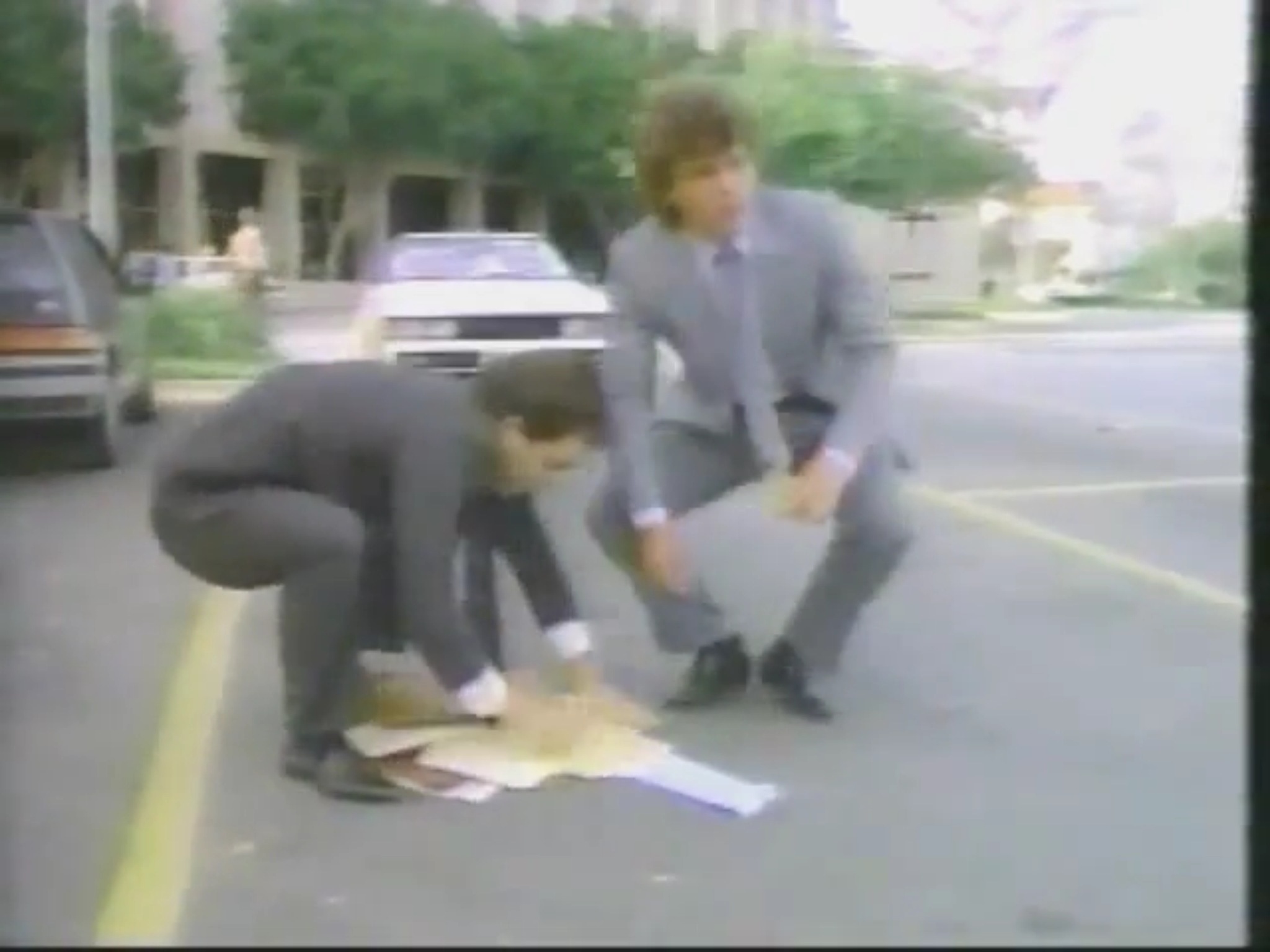
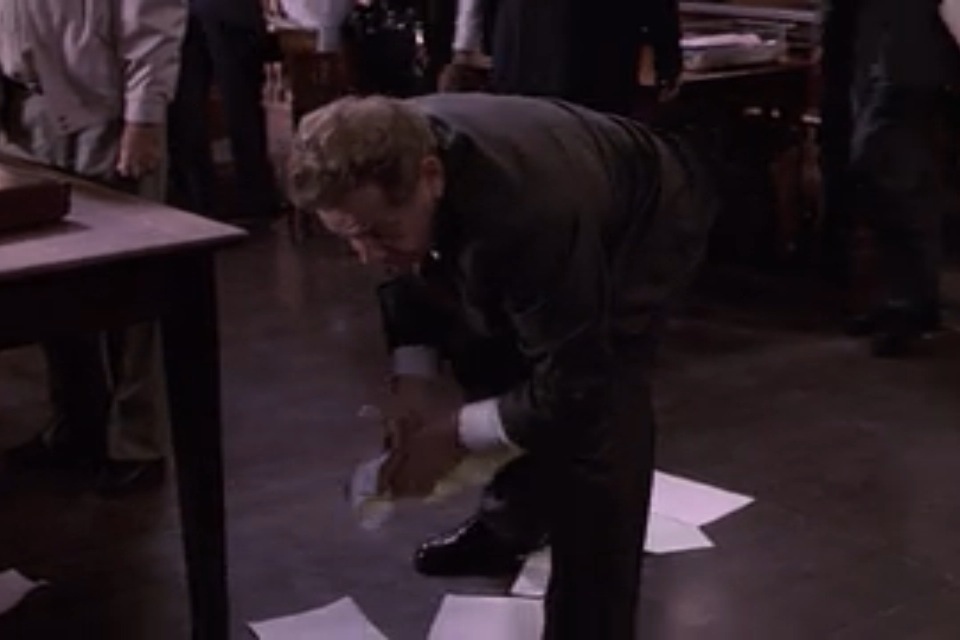
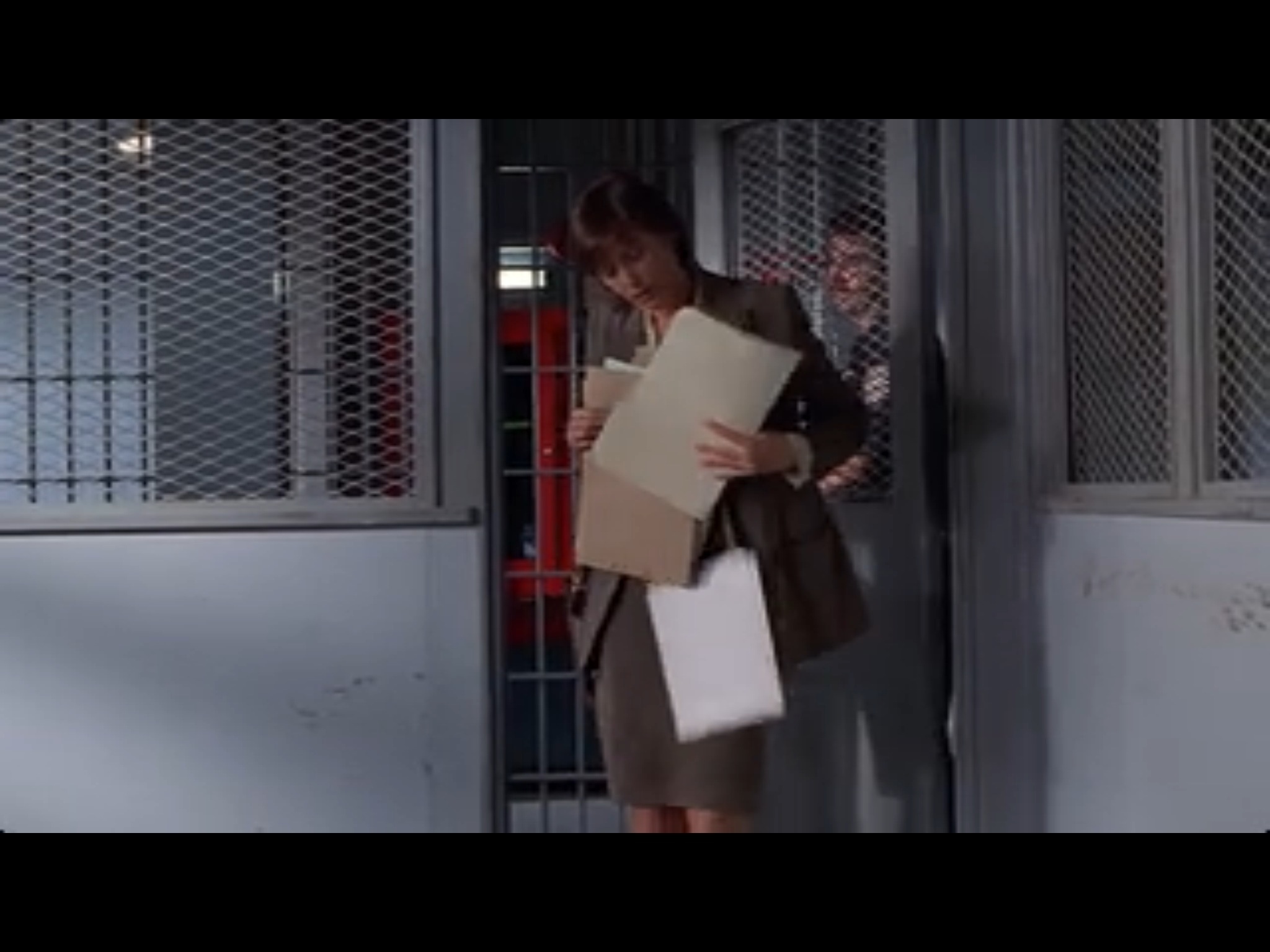
A reliable TV shorthand for an incompetent lawyer is the inability to hold on to important papers without dropping them all over the floor. This is why all your best lawyers have superior hand-eye coordination and a history of athletic excellence.

The last picture is from an episode of Law and Order, in which ADA Ross drops her papers on purpose so that the defense attorney will assume she’s incompetent and not take her seriously. Thus, the poorly coordinated lawyer trope combines with the pool hustler trope for a great bit of legal maneuvering.

20140313-111111.jpg

20140313-111141.jpg

20140313-111157.jpg

 
2 Comments

Posted by on March 13, 2014 in Pop Life


Tags: ,

Something Approximating Annie

The trailer for something they’re calling Annie starring Jamie Foxx and Cameron Diaz looks as lousy as it is terrible.

https://www.youtube.com/watch?v=nrxc8rS2W2E

The race change for Daddy Warbucks (now named “Will Stacks” because there are only white people with the surname “Warbucks”) and Annie possibly requires the update to modern-day New York, but the depression-era setting was critical to the original stage production. If you change setting and character (and a race change is a character change — the experiences of a white orphan and a white millionaire from the 1933 is drastic enough from that of a black orphan and black millionaire from 2014 as to essentially make them different people), you’re no longer adapting the original story but rather producing something that is merely “inspired by.”

Aside from being far more faithful to the source material, the 1982 film featured Carol Burnett, Anne Reinking, Tim Curry, and Bernadette Peters, and the best you can give me 30 years later is Cameron Diaz and stale George Clooney and Facebook jokes? Really? It’s like no one told Diaz that she’s playing Miss Hannigan in an actual movie rather than a late-night TV show sketch.

 
1 Comment

Posted by on March 11, 2014 in Pop Life


Tags: , ,