When I saw jazz vocalist Annie Ross perform at the Metropolitan Room in New York last year, she paused before starting a number she’d originally recorded with the group Lambert, Hendricks & Ross. She surveyed the crowd. There weren’t many of us there on a Monday night in July, and even less were probably alive when the group parted ways in 1962. “You know what we did back then, right?”
The audience assured Ms. Ross that we knew — if we did not personally remember — what she did “back then” with partners Dave Lambert and Jon Hendricks. The group specialized in vocalese, a style of jazz in which singers add their own lyrics to all-instrumental compositions. A popular example is Ms. Ross’s 1952 version of Wardell Gray’s “Twisted.”
The seeds of hip-hop are evident in vocalese, as it’s not enough to just sing the lyrics. You’ve got to flow. Lambert, Hendricks and Ross deliver with an improvisational casualness that belie the complexity of the arrangements.
Their first album was the 1957 Sing a Song of Basie. Here’s a clip of the three performing “Everyday I Have the Blues.” And, yes, I can relate.
The three used overdubbing to sing all the vocal tracks on the album and the result is remarkable. My favorite of their work together and the album you must download immediately if you haven’t already is the self-titled Lambert, Hendricks & Ross! (also known as The Hottest New Group in Jazz). It also includes the LPs Lambert, Hendricks & Ross Sing Ellington and Rarities. There’s an update of “Twisted,” as well as two versions of Dizzy Gillespie’s classic “A Night in Tunisia.”
Lambert died in 1966. Hendricks is 90 and appeared at the Blue Note last year with Ross, who still wails at 81. When an octogenarian belts out “Rocks in My Bed,” it is an awesome sight.
I don’t have too much to say about the 30th anniversary of David Letterman’s talk show, which as a warning means this is going to be long post.
Technically, Letterman hosted Late Night with David Letterman on NBC for 11 years and Late Show with David Letterman for 19. I never watched much of Late Show. I think the only full episode I’ve seen was a live taping my friend Renee and I attended in 1997. Letterman came out prior to the monologue and promised the audience a great show. If that didn’t happen, he vowed to “personally fight every one of us.”
That was the Letterman I remembered from Late Night, which I did watch fairly obsessively during my childhood. I recall my enthusiasm when it started airing on Fridays (replacing Friday Night Videos). The promos declared that we could now enjoy the show “five thrilling Daves a week.”
The 1987 intro for Late Night encapsulated New York City for me in just under a minute and fueled my excitement for my first trip to the city that year. It was a strangely alluring world of oddballs and hustlers. Letterman, the midwesterner, held court over them all. This included regular guests such as Sandra Bernhard, Chris Elliott, and Andy Kaufman.
There was an edginess to the show back then that hasn’t been duplicated. Some might point to The Daily Show or The Colbert Report but both are fairly mainstream. That could be a result of the Internet. Maybe if Facebook had been around in the late ’80s, there would have been forwards of various Letterman bits: Elliott as Marlon Brando, Crispin Glover’s on-air breakdown, and Bernhard’s appearance with Madonna. I’m glad that wasn’t the case. I preferred feeling as if Late Night existed in my own private world.
I don’t think they’ll ever be another Late Night with David Letterman. Actually, there hasn’t been one since the final episode in 1993. He probably viewed it as a younger man’s game and ceded the stage to Conan O’Brien. For anyone a decade or so younger than I am, Conan was probably their Letterman, and they also got to see him lose The Tonight Show to Jay Leno.
It’s uncertain how long Letterman will remain on late night. He’s already outlasted his mentor Johnny Carson. Leno will have hosted The Tonight Show for 20 years this May (give or take a few misguided months in prime time). Jon Stewart turns 50 in November. The late-night field is aging. Jimmys Fallon and Kimmel are not really 11:30 p.m. material. It might seem a curious suggestion, but I think the person best suited to host a Carson-style Tonight Show would be Stephen Colbert. I’ve seen him out of character and he possesses Johnny Carson’s class and middle-American hipness (in contrast to Stewart’s decidedly New York hipness).
This Dr Pepper commercial does several things that annoy me:
The ad doesn’t bother detailing the virtues of the product because it has none. Its second ingredient is high fructose corn syrup, which will keep you on track for diabetes and gout. It also contains phosphoric acid that will strip away the enamel from your teeth. And its primary purpose is to serve as a delivery system for a psychoactic drug.
There is enough wrong with soda that you wonder why their commercials don’t look like a pharmaceutical ad.
Maybe in 30 years or so we’ll view today’s soda ads with the same disbelief we have for cigarette ads from the 1960s.
Odd that the pharmaceutical ad is the most honest of the bunch. Like the cigarette ads of yesterday, the Dr Pepper ad pushes a lifestyle and worse endeavors to make the consumption of its product somehow admirable. It’s even generous enough to ask that you go on Twitter and use its focus-group crafted hashtag to help spread the word.
Selling consumerism as individualism is not new. Apple did it in 1984 with its famous Super Bowl ad inspired by the George Orwell novel. There’s no information about the actual product and how its superior to the competition. No, all you need to know is that the competition offers conformity and Apple offers freedom and individuality. Not too much individuality, of course, as the company wants to sell some computers but popular individuality, which is what every American teen desires.
Watching this ad again, the dystopian society depicted resembles an Apple factory in China but with breaks for organized TV viewing.
In 1987, Nike co-opted The Beatles’ “Revolution,” a song about non-violent social change, to sell high-priced sneakers — as if there is something revolutionary about spending lots of money on articles of clothing. This was basically the Reagan era telling the 1960s counter culture: “We won.” Kids bought into it, though. Some died, as a result.
The Super Bowl annually combines two of my least favorite things — professional sports and conspicuous consumerism. Three, if you count the ritual humiliation of once-great musical acts. At some point, people started paying more attention to the ads that aired during the game than the game itself. I watched these professionally for 10 years. There’s not one legitimate emotion revealed or original idea explored. It is a collection of lies and untruths with one common theme — buy.
The big ad this year is a Honda spot featuring Matthew Broderick in a parody of his role in “Ferris Bueller’s Day Off.” Yeah, Broderick’s almost 50 now but so was Alan Ruck when he played Cameron.
This has upset some people on the Internets. MaryAnn Johanson at Flick Filosopher laments that the ad is just Broderick hawking cars while the 1986 movie was “about nonconformity, breaking out, being a rebel.” I respectfully disagree. These “rebels” used their freedom to drive through posh Chicago in a sports car and dine at an exclusive restaurant the film’s antagonist Ed Rooney could never afford. Is it bold and individualistic to skip school? And to face no repercussions for your actions? Rooney doesn’t pursue Ferris for unjust reasons — it’s not like he’s a poor kid Rooney unfairly resents at the magnet school. Ferris is actually guilty.
I suppose it doesn’t matter because the presentation of the movie is designed so that you’ll ignore the actual substance. It’s a feature length commercial, which is why it’s impossible for the Honda ad to “sell out” what Ferris Bueller represents. Ferris is commercial culture. Now go buy a Dr Pepper.
I wrote yesterday about the GOP rush to defend the pretty much indefensible behavior of Newt Gingrich. The entertainment continues today and shows no signs of becoming less ridiculous.
Sarah Palin, who in Greek myth would be the physical embodiment of ridiculousness, made the claim on Sean Hannity’s radio show that ABC News aired the interview with Gingrich’s second ex-wife Marianne to “derail his campaign.” She then said in the most eloquent manner possible that these efforts would backfire.
PALIN: I call them dumbarses. They, thinking that by trotting out this old Gingrich divorce interview that’s old news — and it does feature a disgruntled ex, claiming that it would destroy his campaign — all it does, Sean, is incentive conservatives and independents who are so sick of the politics of personal destruction, because it’s played so selectively by media, that their target, in this case Newt, he’s now going to soar even more. Because we know the game now, and we just won’t put up with it.
Dumbarses? Palin is a grandmother but isn’t she a little young to be the “kooky grandmother” who says whatever pops into her head during Thanksgiving dinner? And how long does she plan on referring to the “media” as a separate entity from the media that pays her rent?
It’s not even logical that ABC News would go to the trouble of destroying Gingrich’s campaign when it would depend on the network knowing ahead of time about (former?) frontrunner Romney’s weak debate performances, Gingrich’s resulting surge, and Rick Perry’s exit from the race and endorsement of Newt. Any rational person knows that ABC’s time travel budget has been greatly slashed.
I’m not sure if Palin is aware that the phrase “politics of personal destruction” was first used by Richard Gephardt in a 1998 speech during the Bill Clinton impeachment proceedings. Gingrich was a willing participant in this destruction. He has dismissed the apparent hypocrisy on what amounts to semantics, but it seems sufficient to appease most of his supporters.
When asked about his ex-wife’s allegations during Thursday’s GOP debate in South Carolina, Gingrich worked some spellbinding political sleight of hand.
“To take an ex-wife and make it, two days before the primary, a significant question in a presidential campaign is as close to despicable as anything I can imagine,” Gingrich went on, calling the allegation “false” and provoking a standing ovation from the debate audience.
The Christian Broadcasting Network’s (David) Brody said that Gingrich’s response to the “open marriage” question “took a weakness and turned it into a strength.”
Bill Clinton himself is sufficient evidence that the media does not target candidates selectively. It goes where the stories are, and sex scandals sell. Arguably, an interview with a “disgruntled ex” of Gingrich is just as relevant as an interview with a disgruntled former employee of Mitt Romney. Gingrich’s Super PAC released the video “When Mitt Romney Came to Town” about his time with Bain Capital (again, really, “Bain” is the name you choose for your company). He later asked for it to be re-edited or removed from the Internet entirely due to inaccuracies. This is the “Eat Your Cake and Have It Too” approach to politics that Stephen Colbert is effectively skewering with his own Super PAC.
Romney is campaigning as a successful businessman who can turn around the economy. Gingrich seeks to puncture that image by illustrating the actual results of Romney’s form of “vulture capitalism.” However, Gingrich is campaigning as a “Reagan Conservative.” He still talks about “traditional values” and supports the Defense of Marriage Act.
I realize the president is not the Pope because a woman could actually hold the former office. I don’t care if you have more ex-wives than Michael Mancini from Melrose Place and choose to run for president. I do care if you support Proposition 8 under the pretense of “protecting marriage” while perhaps legally qualifying as the worst husband since King Henry.
Gingrich supports Prop 8 on apparent belief that the majority can remove rights from the minority. What these “appointed lawyers” understand is that their job is to enforce the Constitution. Alabama can’t suddenly vote to stimulate the economy by reviving slavery. It would certainly be unfortunate for Gingrich if the nation had voted to “protect marriage” by banning divorce. He’d still be with his second wife… or even his first.
This is why I don’t buy the “I’ve made mistakes in my past, which I regret” line that Gingrich feeds his supporters. Marianne Gingrich is still alive. He could have ended his affair with Callista and returned to his wife. He instead not only divorced her but married his mistress. Everything came out Ethel Merman for him.
Rick Perry had no trouble telling a 14-year-old bisexual girl that homosexuality is a sin and that gays serving openly in the military is not “good public policy.” Yet, he takes a “no one’s perfect” attitude toward a man breaking the seventh commandment and then marrying his partner in crime. Callista Gingrich is not a “mistake” from the past or “old news.” She’s very much a part of the present.
This is the man that evangelicals would prefer to Barack Obama, who to my knowledge has had only one wife. Michelle Obama also has no history of “husband napping.”
“To a degree, [Gingrich’s past] will give [evangelical voters] pause, but there’s a much more insatiable appetite to defeat President Obama,” said Brody… “Gingrich has never claimed to be a patron saint.. People have known for years about Gingrich’s marriage issues. In a way, his well-known history of troubled marriage works for him here.”
No, discussing Gingrich’s past is not “despicable” or the “politics of personal destruction.” Gingrich chose to make the personal political, and while that is despicable, it is appropriate to draw back the curtain on his own corruption.
A potent U.S. weapon that al Qaeda could not hope to overcome.
Actor Mark Wahlberg set the Internets aflame with the following comments that appeared in the February issue of Men’s Journal:
On being scheduled to be on one of the planes that crashed into the World Trade Center “If I was on that plane with my kids, it wouldn’t have went down like it did. There would have been a lot of blood in that first-class cabin and then me saying, ‘OK, we’re going to land somewhere safely, don’t worry.’”
I was in New York when the towers fell, and I recall thinking, “This never would have happened if an underwear model had been on board.”
If Osama bin Laden had had access to the flight register and had seen Wahlberg’s name, he would have called the whole thing off. His top lieutenants might have respectfully questioned the decision and bin Laden would have calmly — though secretly making every effort not to wet himself — inserted into his cave’s VCR a battered, 10-year-old VHS tape.
“See,” he would’ve said, his voice trembling slightly, “this is when he went by the name ‘Marky Mark’ and traveled with a covert ops group known as ‘The Funky Bunch.'”
“Merciful Allah! Why did we ever doubt you! Of course, we cannot proceed. Though, we are curious — is the woman singing during the chorus also a member of this ‘Funky Bunch’?”
“That is uncertain. Our intelligence can neither confirm nor deny. I would put nothing past the Americans, though. Still, he speaks to our shame — we are not ‘in it to win it,’ so we must ‘get the hell out.'”
Osama bin Laden and his men would have then turned themselves over to Wahlberg’s Funky Bunch agents — at the time stationed in Pakistan — and all the nations of the world (black, white, red, brown) would have thrown Wahlberg a parade.
Or at least that’s how it probably went in one of the 50 dreams he’s had “about what he would have done to fight the airborne terrorists.”
This is one of those misguided statements that elicit a “Carefully Crafted Celebrity Apology.” Wahlberg’s came in short order:
“To speculate about such a situation is ridiculous to begin with, and to suggest I would have done anything differently than the passengers on that plane was irresponsible. I deeply apologize to the families of the victims that my answer came off as insensitive, it was certainly not my intention.”
See? All better. It wasn’t Wahlberg’s intent to imply that the men and women on those hijacked planes were spineless cowards who didn’t love their families as much as he does.
If it seems as if the “Carefully Crafted Celebrity Apology” was written by someone other than the actual celebrity, someone with a more advanced formal education who specializes in public relations, you are probably not mistaken. Generally, the Carefully Crafted Celebrity Apology is preceded by the Panicked Phone Call to a publicist, who usually exclaims, “He/She said what?”
Anyone who grew up when rap was the popular music of the day might find it hard to believe there was a time when blacks were expected to be humble, to graciously accept whatever scraps were tossed to them.
Muhammad Ali, born Cassius Clay 70 years ago, was not humble. In a time when calling a black man “uppity” could have lethal implications for him, Ali declared himself “the greatest of all time.” He seized “American exceptionalism” as his own and refused to accept that it was only the province of whites. He wasn’t just handsome. He was “pretty.”
People like to point out the apparent contradiction of a man who made his living beating other men senseless refusing to serve in Vietnam. However, Ali never claimed to be a pacifist. He would fight for his own interests and for the interests of those close to him. But fight for the interests of a nation that barely tolerated his existence, that refused to grant him the rights that should have been his as an American? No, Ali was pretty but he was no fool.
Vietnam, we’re told, was about more than a powerful nation killing poor people. The spread of communism had to be stopped, they said. These are the sorts of big picture, strategic issues that the wealthy and powerful understand far better than the poor and simple. That’s why, even today in Iraq and Afghanistan, I encourage the wealthy and powerful, who understand the reasons for war so well, to go and fight in them.
Of course, even in after World War II, which was as just a war as a war could ever be, black soldiers returned to a country where they were still denied service in restaurants and even beaten and lynched. That was their prize.
Ali was criticized — as was Malcolm X — for his harsh words about whites. Were all whites their enemies? No, but it was hard to dispute that the collective group at the time was either enemy or enabler. It amuses me because American leaders had harsher words to say about the Japanese during World War II, the Soviets during the Cold War, and Muslims today. Martin Luther King preached love, which is admirable, but sometimes true love requires confrontation. Sometimes, the American empire must be told it has no clothes.
Parkinson’s has ravaged Ali, but I won’t dwell on that. Everyone falls hard at the end, even if they never get off the ground. Only a few people ever soar.
Paula Deen revealed on The Today Show that she has Type 2 diabetes. I’m impressed that it’s not more severe, like Type 20/20.
Deen made her shocking — in the Claude Rains sense — disclosure to Al Roker, who had gastric bypass surgery years ago to deal with his own weight problems.
There is some controversy that Deen has pushed fat-laden dishes on her show while being diabetic. Anthony Bourdain believes this is in “bad taste,” though Deen contends she is “your cook, not your doctor.”
Only she’s not much of a cook. Her concoctions remind me of what would happen when my parents would leave me alone in the house when I was in middle school. I once made Ice Cream a la Robinson, which was butter pecan ice cream drenched in half and half. Yes, it was disgustingly delicious. I didn’t get away with it, though. Somehow my mother knew that the ice cream had been moved one inch to the right, and she could tell at a glance that there was less half and half in the carton. Probably because I’d used up all the half and half and put an empty carton back in the refrigerator. Rookie mistake.
My other childhood invention was the spaghetti sandwich — spaghetti with melted cheddar cheese on whole-wheat toast. I am still sore that Deen repurposed this as a lasagna sandwich without crediting me.
Here she is making a less-healthful version, if possible, of the Luther Burger.
And here she is frying a cheesecake:
Deen has been treating her condition with Novo Nordisk drug Victoza, according to USA Today. She’s been less successfully treating her exaggerated Southern accent with Novo Nordisk drug VivienLeighoza.
This is the American way: Tank your health with lasagna sandwiches and fried cheesecakes then make the drug companies rich. Many of her viewers probably don’t even have health insurance. Oh well, I’ll give them my Ice Cream a la Robinson recipe for free.
Charles M. Blow of the New York Times has an interesting piece about the “politics of envy.”
In his New Hampshire victory speech on Tuesday, Romney lambasted his Republican opponents (who have raised real issues about his role at the private equity firm Bain Capital) for following the lead of President Obama, whom he described as a leader who divides us “with the bitter politics of envy.”
The next day on “Today” on NBC, Romney defended the statement, rejecting the notion that there were questions about Wall Street behavior, saying the whole discussion was about class warfare. He even went so far as to suggest that such talk shouldn’t even be openly entertained. When the interviewer asked, “Are there no fair questions about the distribution of wealth without it being seen as envy, though?” Romney responded, “I think it’s fine to talk about those things in quiet rooms and discussions about tax policy and the like.”
Quiet rooms? This isn’t a discussion of Keats in the sumptuously furnished salon of the Earl of Stuffypants. This is a serious issue. As Blow points out, the problem is that we’ve been “too quiet for too long” and I agree with him that if the Occupy movement deserves any praise, it should be for making these issues public and making certain people very uncomfortable.
And it is these people’s “discomfort” that this is all about. They rail about “class warfare” when very real concerns regarding income disparity are raised but are quick to warn voters about the insidious spread of socialism. Please note that the former concern is based on the history of the past 30 years. The latter is based on science fiction.
It’s not that they don’t want to fight a class war. They just don’t want the other classes to defend themselves. Shut up and take it while wondering what the hell happened in the “your quiet room” — before your friends at the bank foreclose on it.
I’ve stated before that Republicans these days sound more like Randians than anything else. However, I’m struck by the level of inconsistency in their beliefs. They have no interest in sacrificing for you but believe you should sacrifice for them. Basically, “one for all and all for us.”
The issue people have with Mitt Romney and Bain Capital (really, who names a company “Bain”?) is not based in “envy” so much as the simple fact that the system didn’t work for them. Should the 1,750 people who lost their jobs at Georgetown Steel applaud Romney’s business acumen in simultaneously doubling Bain’s investment even though Georgetown Steel eventually went bankrupt? The commonly trotted out excuse that Romney and his supporters give is that Bain’s actions “saved” other jobs, but this doesn’t mean much for the people whose jobs weren’t saved. Isn’t that “cold comfort” closer to the “socialism” Republicans revile? Putting the interests of others and of the “corporate state” over their own? How is that in their “rational self-interest”?
I’ve been in the position of having to fire employees whose jobs were being sent elsewhere. The HR talking points I was given had a section regarding how this “decision was not taken lightly” and would “benefit the company as a whole, by allowing it to remain competitive.” I refused to repeat this nonsense — pointing out that even if these statements were true, why should the terminated employee care? The only reason to try to reassure him that the company doesn’t “like” firing people is to avoid negative PR and only serves the company’s interests — from the employee’s perspective, the motivation doesn’t change the end result. And why should he care about the health of the “corporate state” once he’s been expelled from it? It’s not like he has stock in the company that will generate revenue for him even if he no longer earns a salary.
Hostess pulled the same shenanigans when it announced its latest bankruptcy.
In a court document explaining how the company got into this mess, Hostess largely pins the blame on its labor costs, as well as increased competition, poor financial performance and excessive levels of debt. Hostess also says the company didn’t do enough to fix itself during a lengthy prior stint in bankruptcy protection less than a decade ago.
Hostess said it does not “have a competitive cost structure and cannot achieve viability on a long-term sustainable basis,” according to its court filing. ”The company obtained only modest concessions relating to health and welfare, as well as inflexible requirements under their collective bargaining agreements relating to work rules,” Hostess says in its court filing, which says the company and its employees have 372 separate labor agreements.
“Modest concessions” relating to “health and welfare”? So, apparently it’s the unionized labor’s fault for not allowing management to create a more efficient plantation-style model in which they sacrifice for the company’s long-term profit and benefit. Their employees’ well-being seems to mean little to the company so why should the employees be all that concerned about the company?
Why is rational self-interest so selective in this country? Millionaires paying more in taxes is an unfair burden. It’s wealth redistribution. But unionized labor — even teachers — must “sacrifice” for the sake of the nation.
Is this an example of “some animals are more equal than others”? Whatever the bill of good that’s been sold, Americans are slowly realizing it’s a con. We are either all in this together or we’re not. If “sacrifice” leads to “socialism,” then it’s in working-class people’s best interests to advocate for better pay and better benefits (by “better,” I refer to the distant past prior to the Reagan administration). If you’re one of the countless Americans who don’t have health insurance, you are under no obligation to continue to sacrifice for the corporations that need to deprive you of those benefits to “remain competitive.”
Newt Gingrich argues that raising the minimum wage would lead to unemployment. Suppose he’s right (and I don’t) and companies would have to get by with 10% less employees if working-class wages are increased. Isn’t Comrade Gingrich advocating for a socialist system where you take a pay cut for the benefit of your coworkers and the “state” (your company)? If this is a “merit” society, as Romney likes to say before adding more millions to his children and grandchildren’s trust funds, then the best employees would survive the resulting cuts and have more to show for it. Would the company’s profits suffer if the workforce decreased? Perhaps. But if you’re making minimum wage, the minimum you should care is whether the company keeps the doors open.
It does make you wonder who the real “socialists” are in this country. And why the average Americans fear the “public state” more than the “corporate state,” which as far more power over their lives these days.
My last haircut was November 14, 2011. My hair grows very quickly so I currently resemble Freddie “Boom Boom” Washington from “Welcome Back, Kotter.”
"Hi there!"
My mother would not be pleased with this development. Growing up, she insisted on a strict grooming regimen — haircut once a month, a trim every other week. She was also rather strict when it came to hairstyles — nothing trendy because you always regretted it later when you looked at old photos of yourself. “Same haircut your whole life” was her theory. “Same wig you’ll deny wearing your whole life” was her practice.
I veered from her instructions on one notable occasion. My barber, who sounded and smelled as if he’d taken a hit from a bong five minutes before my appointment, suggested “trying out” a new idea of his on me. Yeah, that’s how ignorant I was. I let the guy, who was barely competent when not high, use me as his guinea pig. I left the barber’s with what he called an “eggshell” — no hair around the sides and a zig-zag “eggshell” pattern on top.
When I got in the car, my father turned on the engine in silence and pulled out of the parking lot. A few miles later, he finally spoke: “What did your mother tell you?”
I lowered my head. “Same haircut your whole life.”
I felt bad for my father. My mother was basically CEO of Robinson LLC, and she’d delegated to my father the task of taking me to the barber. Despite years of more than adequate service in that role, once she saw my “eggshell” haircut, it was obvious that he’d be restricted to simply mowing the lawn and jiggling the TV antenna outside to get better reception.
After I graduated from college and moved to New York, I abandoned my mother’s strict haircutting schedule for
I might need a haircut but I'm never going back to one of these places again.
the more relaxed “every once in a while.” If I started to get too bushy, I would apply a fistful of styling product to my hair and simply comb it away from my head. This would usually buy me a couple more weeks.
When I did break down and get a haircut, I would frequent the barber colleges, where for just $6, you could almost lose an ear. Once, a particularly nervous student was working on my hair for about half an hour when his teacher stopped to have a look. He recoiled in terror and when I asked what was wrong, he said – his face bone white, “Oh, nothing. It’s… uhm, coming along.”
Then I worked up to the $10 barber chains where you’d point to outdated photos of recent parolees on a laminated value menu and say, “I’d like the number 2.” These were the kind of places that gave you a free hat with every haircut.
Occasionally, I’d stumble into seedy dives that reminded me of the “hospitals” that hoods in gangster movies went to because a real doctor would have to report their bullet wounds to the police — flickering, bare light bulb swinging from the ceiling, cries of agony from the back room, the barber/surgeon swigging whiskey from a flask before offering you some.
More than once, I’d receive the sort of butchering for which the only remedy was “an emergency haircut.” This is when you wake up the next day looking like a blind blues musician with the DTs cut your hair. No amount of hair gel can salvage it, so you race to the closest barber and say through your tears, “Look, I don’t care what this costs or what you have to do, but I can’t go on looking like this.”
The one thing these places all had in common was that they didn’t take appointments and if they did, it didn’t matter because you still wound up waiting for about an hour at best. It was like a doctor’s office but the only magazines were “Ebony” and “Jet.”
It wasn’t until I was almost 30 that I discovered true, professional hair salons. I went to John Allan’s in midtown Manhattan for about three years. It was styled as a “gentleman’s club” where you could play billiards and drink a beer before your appointment or smoke a cigar while getting a manicure. I’d written a magazine article about John Allan’s, as well as the Paul Labrecque salon, so I was extended an “Editor’s Rate” that was just a few dollars more than the clown college barbershops but included a manicure, shoe shine, and competence. A trip to the barber was no longer a chore but a pleasant experience.
When John Allan’s technical director, Jesse Sweet (coolest name ever, by the way) left the salon, things began to go downhill. I saw a parade of female stylists, who while more attractive than Jesse were not as skilled. I was already on the fence about continuing there when I made an appointment at Paul Labrecque for a “deep scalp conditioning” treatment. This had worked wonders on my hair when I had it as part of the “research” for my story. It transformed me from Shaggy to Billy Dee. So, a return visit was my Christmas gift to myself. And that’s how I met Misti.
The only way to describe Misti to ask you to imagine your closest friend — how she’s always there for you, how she listens to your problems, comforts you in times of stress, opens her home and her heart to you and expects nothing in return. Now, the only difference is that your friend is just a friend and Misti is an amazing hairstylist. Believe me, the latter is far harder to find.
I knew halfway through our first session that I was never going back to John Allan’s. I lingered at the door for a moment before working up the nerve to ask her, “So, do you also cut men’s hair, Misti?”
“Men’s hair exclusively, actually,” she replied. “Sometimes women’s hair if it’s slow. Would you like me to cut your hair, Stephen?”
“Yes. Yes, I would.” A brief moment of doubt crept up: “You don’t use clippers, do you?”
“No way. I only use scissors.”
I knew we’d get along just fine.
Misti was punctual and cordial in the most Southern California way possible, but the best thing about Misti was her silence. I don’t enjoy conversation when I’m in the barber chair or really any other kind of chair. She even shampooed my hair for me rather than allow her chatty assistant to do it. During the Sighting of My First Gray Hair, Misti said nothing. She just leaned in close and whispered, “Looks like you have a stray hair here. Just a stray hair. I’ll just pluck it out. There, all gone.”
We went on this way — hairstylist and her incredibly vain client — until 6:37 p.m. on October 12, 2008 when Misti announced that she was moving, and… and… I’m sorry, I thought I could talk out it.
Misti’s chatty assistant was promoted to stylist. She was awful and strangely antisemitic. While trying to zone out during one of her never-ending monologues, I heard her comment about her upcoming wedding.
“So, it’s gonna be small, you know. Not too big. I’m not some rich Jew.”
I thought I misheard her — sort of like the “Jew, eat!” or “did you eat?” confusion from “Annie Hall.” Yet, the next time I was there, she started in again.
“I told my fiance – we gotta keep it simple. Not some big affair like the rich Jews would have.”
“Wait a minute,” I interrupted, suddenly remembering something else she’d rambled on about previously. “What’s your fiance’s name?”
“Isaac Goldstein. You know him?”
“No. Do you?”
It's probably time for a haircut.
I immediately switched stylists, preferring one without a shaved head or a white hood. For the past three years, my stylist was Pirrko, the salon’s artistic director. Originally from Finland, she divides her time now between Las Vegas and New York. She was actually the first person to give me the “deep scalp conditioning” treatment and I recall her saying, “Some men come in, they want to talk. Sometimes they don’t want to say a word and I understand completely.” That was just what I needed.
Pirrko cut my hair before the week before my wedding. She also introduced a “don’t ask, don’t tell” policy regarding the increasing number of “stray” hairs that Misti had battled. It wasn’t necessarily an “emergency haircut” but the approach was similar — “Do whatever it takes but we won’t discuss it.”
I said farewell to Pirrko in July of last year. During my travels in Europe, I had my hair cut in Vienna (“nicht schlecht”), Paris (“adéquates”), and Florence (“meraviglioso”). Did I hope to find Misti behind the barber chair at those salons? No, because I’m not a crazy person. However, now I’m back in the states and it’s time to move on. A friend has referred me to a salon in Portland. Unfortunately, the appointment is in two weeks, so my wife will have to put up with “Boom Boom” for a little while longer.
Brooke Jarvis at “Yes Magazine” defies you to “find a stupider op-ed than this one” written by Matthew Dowd, chief strategist for the George Bush re-election campaign in 2004. Journalist Jake Blumgart claims it’s the “stupidest thing” he’s read and possibly “will ever read.” Can it be that bad? Yes, yes it can.
Sunday night, watching Denver quarterback Tim Tebow’s post-game press appearance and President Obama’s interview on CBS’s 60 Minutes, I was struck by the fact that one man is offering his team (and the country actually) the leadership they need while the other is trapped in traditional discourse and scoring political points.
It’s amazing how the lineup on your TV can inspire you. I happened to be watching “Transformers: The Movie” (the only one, thank you very much) when President Obama was on “60 Minutes,” so I was struck by the fact that one sentient robot is offering his fellow Autobots (and the country actually) the leadership they need while the other is trapped in the real world with real problems that can’t be solved by scoring a touchdown. Also, Obama deals with less honorable and rational Decepticons.
Do I buy into some intervention by God because Tebow is a man of incredible religious faith? No. I do believe there is a divine presence in every one of us and in every thing, and the power of that presence remains a mystery of the ages. It can’t be proven or disproven by an intellectual conversation or scientific method, but it is hard not to accept if you are a person of faith and connection to something outside our mere humanity. Yet that is not what this Denver rise and winning streak is about.
Actually, I suspect that Tim Tebow plays so well because of a deal he made with the Devil in order to prevent the Yankees from winning the World Series (yes, I know he’s not playing baseball, but you can’t really trust the Devil). I stand by my half-assed theory because it also can’t be disproven by “intellectual conversation or scientific method.”
Take a look at Obama’s latest interview. It does not make you feel better about where we are heading. You don’t feel like we are going to win under his leadership. He points fingers and refuses to admit his own mistakes or weaknesses. I often wonder where is the Barack Obama of the 2007 and 2008 campaign. That Obama was much more like the leader we need at this time. He offered hope, he had soaring rhetoric, he offered a change from the bitter politics in Washington, and he made us feel we could win.
Yes, whatever happened to that nice, sweet, innocent Carrie White after those girls dumped pig’s blood on her? Why do so many on the right expect Obama to remain some clueless Candide regardless of what happens? But hey, it’s not about who’s right or wrong. A real leader should “admit his own mistakes or weaknesses.”
Yep, Obama, the arrogant socialist, is a stark contrast to Dowd’s former boss George W. Bush.
Tebow is the kind of leader for his football team that our country needs at this crucial moment in history. Yes, the Denver Broncos streak will probably end, and the odds are a team like the Green Bay Packers will win the Super Bowl. But no matter the outcome, Tebow has shown what faith, and confidence and humility can do for a team of limited skills that was losing consistently before. This is exactly what President Franklin Roosevelt and President Reagan understood about leadership.
Roosevelt and Reagan understood… failure? Should that be Obama’s speech at the Democratic Convention this summer? “No matter the outcome, I will demonstrate what faith, and confidence and humility can do for a country of limited skills that was losing consistently before. Or I could just release poison gas into the atmosphere and we could all die in our sleep. Give it some thought. I know where I’m leaning but I don’t want to pressure you. Well, actually, you probably wanna go with the gas. I mean, really, life’s terrible.”
This economy, and our country, do not need more programs out of Washington, D.C., or legislation from Congress, or tax cuts for the wealthy, or more spending on government stimulus. What citizens and businesses need is a leader who can raise us all up to a level we didn’t know we had in us, give us confidence in ourselves, give us a common goal to work toward, and make us believe in and have faith in ourselves again.
Yes, this country needs… the Music Man!
The President or Congress doesn’t need to actually do anything. Much like Superman, the President should not “interfere in human history” but rather his “leadership” will inspire us to fix everything. Clearly, all the country needs is the proper motivation to not go bankrupt. This doesn’t appear that time-consuming, so maybe Tebow could do this while maintaining his secret identity as a highly paid quarterback for a great not-so-metropolitan sports franchise.
The only potential kink is that Tebow is not Constitutionally eligible to run for president, as he’s not yet 35 years old. However, no one seemed to object to a head of lettuce from Minnesota running for the highest office in the land, so Tebow might be able to waive out of this requirement.
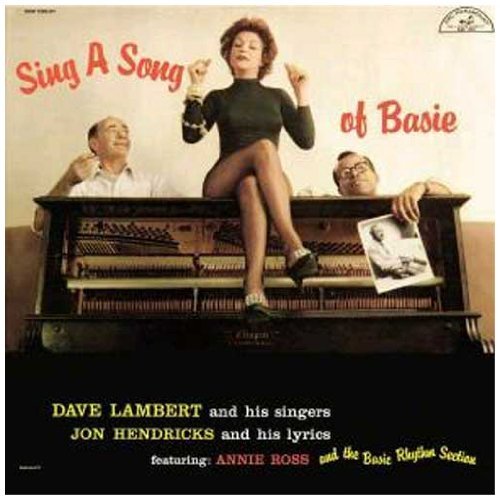 The audience assured Ms. Ross that we knew — if we did not personally remember — what she did “back then” with partners Dave Lambert and Jon Hendricks. The group specialized in vocalese, a style of jazz in which singers add their own lyrics to all-instrumental compositions. A popular example is Ms. Ross’s 1952 version of Wardell Gray’s “Twisted.”


 serhasacomplaint
Today in Advertising…
This Dr Pepper commercial does several things that annoy me:
The ad doesn’t bother detailing the virtues of the product because it has none. Its second ingredient is high fructose corn syrup, which will keep you on track for diabetes and gout. It also contains phosphoric acid that will strip away the enamel from your teeth. And its primary purpose is to serve as a delivery system for a psychoactic drug.
There is enough wrong with soda that you wonder why their commercials don’t look like a pharmaceutical ad.
Maybe in 30 years or so we’ll view today’s soda ads with the same disbelief we have for cigarette ads from the 1960s.
Odd that the pharmaceutical ad is the most honest of the bunch. Like the cigarette ads of yesterday, the Dr Pepper ad pushes a lifestyle and worse endeavors to make the consumption of its product somehow admirable. It’s even generous enough to ask that you go on Twitter and use its focus-group crafted hashtag to help spread the word.
Selling consumerism as individualism is not new. Apple did it in 1984 with its famous Super Bowl ad inspired by the George Orwell novel. There’s no information about the actual product and how its superior to the competition. No, all you need to know is that the competition offers conformity and Apple offers freedom and individuality. Not too much individuality, of course, as the company wants to sell some computers but popular individuality, which is what every American teen desires.
Watching this ad again, the dystopian society depicted resembles an Apple factory in China but with breaks for organized TV viewing.
In 1987, Nike co-opted The Beatles’ “Revolution,” a song about non-violent social change, to sell high-priced sneakers — as if there is something revolutionary about spending lots of money on articles of clothing. This was basically the Reagan era telling the 1960s counter culture: “We won.” Kids bought into it, though. Some died, as a result.
The Super Bowl annually combines two of my least favorite things — professional sports and conspicuous consumerism. Three, if you count the ritual humiliation of once-great musical acts. At some point, people started paying more attention to the ads that aired during the game than the game itself. I watched these professionally for 10 years. There’s not one legitimate emotion revealed or original idea explored. It is a collection of lies and untruths with one common theme — buy.
The big ad this year is a Honda spot featuring Matthew Broderick in a parody of his role in “Ferris Bueller’s Day Off.” Yeah, Broderick’s almost 50 now but so was Alan Ruck when he played Cameron.
This has upset some people on the Internets. MaryAnn Johanson at Flick Filosopher laments that the ad is just Broderick hawking cars while the 1986 movie was “about nonconformity, breaking out, being a rebel.” I respectfully disagree. These “rebels” used their freedom to drive through posh Chicago in a sports car and dine at an exclusive restaurant the film’s antagonist Ed Rooney could never afford. Is it bold and individualistic to skip school? And to face no repercussions for your actions? Rooney doesn’t pursue Ferris for unjust reasons — it’s not like he’s a poor kid Rooney unfairly resents at the magnet school. Ferris is actually guilty.
I suppose it doesn’t matter because the presentation of the movie is designed so that you’ll ignore the actual substance. It’s a feature length commercial, which is why it’s impossible for the Honda ad to “sell out” what Ferris Bueller represents. Ferris is commercial culture. Now go buy a Dr Pepper.
Posted by Stephen Robinson on January 30, 2012 in Capitalism, Pop Life, Social Commentary
Tags: Apple, Dr. Pepper, Ferris Beuller, flick filosopher, Honda, Nike