Back in 1997, my friend Edie told me that her favorite albums were Beggars Banquet by the Rolling Stones and Little Earthquakes by Tori Amos. I immediately bought both albums because that’s the sort of thing a 23 year old does when an incredibly hip 35-year-old woman from Brooklyn gives him insight into her music tastes.
Beggars Banquet remains my favorite Rolling Stone album, and I often think of Edie whenever I hear “Parachute Woman.” It sounds like it was written for her — even if she was only six at the time.
Edie was almost 30 and older than Amos herself when Little Earthquakes was released. It intrigued me that hte album had cross-generational appeal. The video for “Silent All These Years” was an unavoidable MTV “buzz clip” in spring of 1992. Tori didn’t register with me then, but I was hooked on her voice as soon as I listened to the album in full five years later. So, thanks, Edie.
My favorite Tori Amos song is actually not on Little Earthquakes, though. It’s a single she recorded with electronica artist BT called “Blue Skies.” It, along with “Parachute Woman,” has turned up on more than a few mix tapes/CDs I’ve made in the 15 years since that first conversation with Edie.
I lost touch with Edie a few years later (in those pre-Facebook days), but wherever she is, I’m sure she’s “laying a solid rhythm down.”
Yahoo!, which has effectively stored my spam e-mails for almost a decade, announced today that it will purchase Tumblr, a blogging service I don’t use (not a shock given how dated a reference the headline of this blog post is).
The combination of Yahoo and Tumblr creates an online powerhouse with roughly one billion users, which will draw in more advertisers and help Yahoo keep visitors on its properties for longer periods of time, (Marissa) Mayer told Reuters in an interview.
“Tumblr in terms of users and traffic is an immediate growth story for us,” she said.
Sounds like the sort of great idea a high-powered CEO such as Mayer would have.
But then…
Analysts say Yahoo appeared to be overpaying for a business that has never posted a profit, makes a fraction of Yahoo’s sales, and may not contribute significantly to revenue for years.
“Even if revenue was $100 million, it means Yahoo paid 10 times revenue,” said BGC Financial analyst Colin Gillis. “Ten times is what you pay to date the belle of the ball. It’s on the outer bands of M&A.”
Actually, if you’re paying anything to date the “belle of the ball,” she’s actually a prostitute… of the ball.
One question Yahoo may have to address is Tumblr’s reputation as a home for pornographic blogs. At one point in 2009, about 80 percent of Tumblr’s top sites had something to do with adult content. Today that number is closer to 5 percent, according to Quantcast data, but the old image lingers.
Yahoo! can clean up Tumblr all it wants, just so long as it remains the ideal source for information about former Doctor Who star David Tennant’s hair.
If you are consuming a food item with a Universal-horror-film-inspired name, you shouldn’t expect to live long enough to have a son of your own.
This is marketed as a burger for “smaller appetites,” but the sandwich contains 700 calories and 1,760 mg of sodium. That is marginally better than its parent, which boasts 900 calories and 2,020 mg of sodium. Wendy’s modestly describes the Baconator as a “tasty treat.”
If you were born in the early-to-mid 1970s, you might hold some sentimental value for A Very Special Christmas. Released in 1987 to benefit the Special Olympics, it’s a collection of Christmas songs from popular musicians of the period. Because this was the pre-American Idol age, that’s not a bad thing.
My favorites in order:
Eurythmics, Winter Wonderland (no official video, just pictures of Annie Lennox, which is a Christmas gift in itself).
Madonna, Santa Baby
U2, Christmas (Baby Please Come Home)
Oh and, of course…
I’m not as fond of its 1992 follow-up, A Very Special Christmas 2, but it does feature Frank Sinatra and Cyndi Lauper performing Santa Claus Is Coming to Town as a duet (it’s not written as one, by the way, and proper duets are a conversation, but I digress…)
“Honey, for my TripAdvisor review of our nifty B&B, I’m going to post this photo of you enjoying breakfast in your pajamas. That’s just the type of relevant information people want to see.”
“Dear, that’s a fabulous idea, as you can tell from my enthused expression.”
“Hey, did you notice that weird couple by the window? They’re eating breakfast fully dressed. I think they might have already showered and combed their hair.”
“Yeah, I don’t think they know how B&Bs work. They’re acting as though this isn’t their own home.”
I stumbled upon this treat on YouTube, which made my day.
This is a commercial promoting the original Broadway production of “Chicago” from 1975. Stars Gwen Verdon and Chita Rivera don’t appear (which I have to think was intentional) but you get a revealing look at the dancers. I use the word “revealing” not just in the wardrobe (or lack thereof) sense but in the glimpse we get at the overt “seediness” of the show. Guy I knew years ago objected to the 1996 revival because he believed what he called the “Victoria’s Secret costumes” removed the show visually from the period, which is thematically critical. I obviously and most regrettably never saw the original but I do agree that the 1920s and vaudeville are major characters. I also think it was bold of Verdon to really play to the “over-the-hill” aspect of Roxie. I’ve seen stills of her in outfits that are clearly not meant to be flattering.
You also see Bob Fosse’s choreography. Ann Reinking did a great homage to it in the revival but Fosse is much more controlled (imagine the slow movement on one thumb compared to an entire arm).
I shall remain giddy over this find for at least a few days. I’ve mentioned many times before that “Chicago” is my favorite musical — searingly funny book, amazing dance numbers, and not a bad song from start (“All That Jazz”) to finish (“Nowadays”). “All I Need Is the Girl” is one of my favorite songs but out of context, the average person wouldn’t know it’s from “Gypsy.” “Razzle Dazzle” and “Mister Cellophane” are instantly recognizable as from “Chicago” and they’re just from the male leads!
The Great Gatsby, by F. Scott Fitzgerald, is more poetry than prose, which is why I think attempts to translate it to the screen have failed. However, Baz Luhrmann takes a shot at the literary white whale this Christmas in a big-budget, 3D extravaganza that stars Leonard DiCaprio.
Let’s take a look at the trailer.
:11 — We start with Tobey Maguire’s narration as Nick Carraway. Maguire is miscast — just as Paul Rudd was in the 2000 TV movie version. They are both entirely too modern and frankly don’t look like guys who went to Yale and hung out with Tom Buchanan. I think a Chris Pine or a Channing Tatum would have been a better choice: Someone who resembles Tom somewhat physically but not intellectually. Maguire and Rudd strike me as an attempt to cast the Nick we see from his internal commentary on events, which is a mistake. Practically speaking, Nick isn’t wealthy, so Jordan Baker’s attraction to him requires an explanation other than her (non-existent) depth.
:12 — I’m pleased that Luhrmann includes the following scene from Chapter Four: As we crossed Blackwell’s Island a limousine passed us, driven by a white chauffeur, in which sat three modish negroes, two bucks and a girl. I laughed aloud as the yolks of their eyeballs rolled toward us in haughty rivalry.
These two sentences accomplish a great deal: The Harlem Renaissance is taking place, and the grandchildren and perhaps even the children of slaves are enjoying the American Dream as defined by material gain. It is how Gatsby defines it — the transformative, almost baptismal power of money. However, the “bucks” foreshadow the futility of that dream: America’s class structure is as rigid as it pretends not to be. The scene is also a great counterpoint to Tom Buchanan’s earlier racist ramblings about the “colored races” who will “take control over things.” Nick’s casual racism is such that he laughs in their faces. He is secure in the social structure. However, in his misguided way, Buchanan correctly sees the future and fears it. This makes him less racially arrogant than Nick.
:14 — I hope the narration is just for the trailer. The 1974 film and 2000 TV versions used voice-over narration. I find this a cheat. Gatsby isn’t a hardboiled detective story.
:24 — The description of the era reminds me that the 30 years from Nick’s birth in 1892 to the summer of 1922 was world changing in a way that I don’t think has been repeated (and I’m including the ’50s and the ’80s).
:27 — Jordan Baker, my literary love, is again depicted (incorrectly) as a brunette. From the book:
Chapter One: Tom and Miss Baker sat at either end of the long couch and she read aloud to him from the Saturday Evening Post.— the words, murmurous and uninflected, running together in a soothing tune. The lamp-light, bright on his boots and dull on the autumn-leaf yellow of her hair, glinted along the paper as she turned a page with a flutter of slender muscles in her arms.
Chapter Nine: She was dressed to play golf, and I remember thinking she looked like a good illustration, her chin raised a little jauntily, her hair the color of an autumn leaf, her face the same brown tint as the fingerless glove on her knee.
If autumn is the death of summer — when the events of the story take place, the color of Jordan’s hair takes on an appropriate meaning for her character.
Elizabeth Debicki, who plays Jordan, is also very pale, and Fitzgerald goes to great lengths to describe Jordan’s skin as tan (“golden” being the most commonly used descriptor and again symbolically appropriate).
:34 — Daisy Buchanan (here played by Carey Mulligan) is one of the most fascinating villains (yes, villains) in literature. Our tendency to not view her as villainous recalls Nick’s chauvinistic line that “Dishonesty in a woman is a thing you never blame deeply.” Perhaps if Daisy were male… just as we might view Tom differently if he were female.
I’m told that Jordan is usually depicted as a brunette in order to avoid confusion with Daisy, which still doesn’t make sense because Daisy is a brunette:
Chapter Five: A damp streak of hair lay like a dash of blue paint across her cheek, and her hand was wet with glistening drops as I took it to help her from the car.
Dark hair would take on a bluish tint when wet.
Chapter Eight: On the last afternoon before he went abroad, he sat with Daisy in his arms for a long, silent time. It was a cold fall day, with fire in the room and her cheeks flushed. Now and then she moved and he changed his arm a little, and once he kissed her dark shining hair.
Her hair color is also obliquely referenced in Chapter One during Tom’s racist tirade:
“This idea is that we’re Nordics. I am, and you are, and you are, and ——” After an infinitesimal hesitation he included Daisy with a slight nod, and she winked at me again. “— And we’ve produced all the things that go to make civilization — oh, science and art, and all that. Do you see?”
If you’ve been to the Nordic countries (Denmark, Norway, Sweden), you would notice that there are a lot of blondes around. So, the reasonable assumption is that Tom is blonde, Nick is also (though never cast as such), as well as Jordan. Daisy is not. This doesn’t mean she’s from Compton but she’s most likely pale with dark hair… so like the lady playing Jordan in the movie. Sigh.
:46 — DiCaprio as Gatsby. I can’t think of a better actor of this generation for the part. Also… he’s my age so I still feel young.
1:01 — Changing the location of the lunchtime meeting with Meyer Wolfsheim into some sort of speakeasy, strip joint is unnecessary and misses the point of what Gatsby is attempting to accomplish with Nick.
1:13 — Joel Edgerton — also my age, so again, I feel young — has the brutish appearance (if not the “straw-colored hair”) of Tom Buchanan.
1:19 — I hope there’s more to Mulligan’s performance than this overdrawn mopiness, which isn’t Daisy Buchanan. I can’t disagree more with how she delivers the key line, “You always look so cool.” It is not an anguished declaration of love but the flighty, indiscreet comment from a woman whose “voice is full of money.”
1:31 — Now, this is just terrible. My Jordan Baker does not get excited about things. She is cool as ice.
Chapter Three: “It was — simply amazing,” she repeated abstractedly. “But I swore I wouldn’t tell it and here I am tantalizing you.” She yawned gracefully in my face: “Please come and see me. . . . Phone book . . . Under the name of Mrs. Sigourney Howard . . . My aunt . . .” She was hurrying off as she talked — her brown hand waved a jaunty salute as she melted into her party at the door.
2:00 — We never know if Gatsby and Daisy consummate their affair (because Nick himself doesn’t know). Unless Nick is filming this for future use, then the film chooses to show us things outside of his point of view, which is a mistake (it also creates narrative inconsistency — if the POV can just shift, then why would we not know when Jordan does about Gatsby’s request, and so on?).
Further, I think Gatsby’s dream is greater than simply having sex with Daisy. If he does that, then it’s just an affair. He wants to court her — as he did in the past but correctly this time — and then marry her and obliterate their five years apart.
2:05: Isla Fisher as Myrtle Wilson? Huh?
Chapter Two: She was in the middle thirties, and faintly stout, but she carried her surplus flesh sensuously as some women can. Her face, above a spotted dress of dark blue crepe-de-chine, contained no facet or gleam of beauty, but there was an immediately perceptible vitality about her as if the nerves of her body were continually smouldering.
And if Myrtle’s fate is experienced in 3D… oy vey.
My first time in New Orleans, in December of 1995, I was more excited about browsing through the French Quarter’s independent record stores than in exploring Bourbon Street at its raunchiest. In those pre-Amazon/Napster days, I relished the opportunity to scour through the bins of stores in other towns. If your tastes went beyond Top 40 releases from the past five years, you weren’t interested in a Sam Goody or a Walmart. You kept your eyes out for a “wrecka stow.”
I first heard the term used in 1986’s Under the Cherry Moon starring Prince. Unless you’re Prince or me, you probably haven’t seen the film but there’s a scene in which he asks the very English Kristin Scott Thomas to say “wrecka stow.” Her Masterpiece Theater pronunciation of the term is hilarious.
My friends and I had passed by a promising indie shop on our way to our next drink (when visiting New Orleans, you are always on your way to your next drink). I offhandedly referred to the place as a “wrecka stow” and my friend Todd found it amusing. Later that day, he suggested we head back to the “wrecka stow.” By this point, I think he just enjoyed saying it. He did much better than Ms. Thomas.
Once inside, I went straight for the Prince section. Although Sam Goody had a decent supply of Purple Rain and 1999, his earlier material, especially his 7 and 12-inch singles, was harder to find. Prince had just released a Greatest Hits Collection that was comprehensive but mercilessly cut. It’s criminal to hear a three-and-a-half minute 1999 or I Could Never Take the Place of Your Man. I had all of the albums, but the extended mixes from the 12-inch-singles required patience and scavenging.
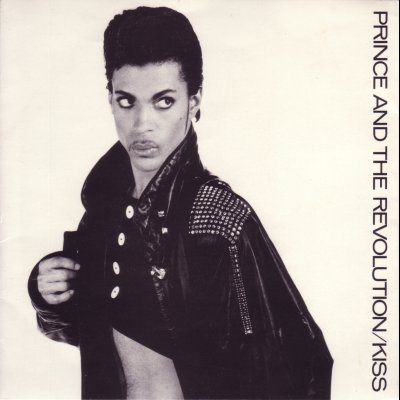
My big purchase that day was the 7-inch single for Prince’s Kiss. Todd humored me and listened to my explanation for why this was the best thing ever: Prince’s Greatest Hits CD had also come with a bonus disc of non-album B-Sides. For whatever reason, though, Love or Money, the B-Side to Kiss, was not included. I don’t even remember what it cost. Price was no object. Todd and I had a drink to celebrate my success.
This morning, while in the tub listening to Prince’s Crystal Ball, it occurred to me that because I only ever owned Love or Money on vinyl, it wasn’t on my iPod. I found it on iTunes and downloaded it while brushing my teeth. The 21-year-old me would be impressed but a part of me envies him and the joy of the hunt.
Employers at some companies are attempting to use Facebook as the ultimate follow-up interview:
It’s become standard practice for employers and schools to peruse potential applicants’ Facebook profiles. But in some cases, they are going even further: Some have demanded applicants hand over their passwords so they can view individual’s restricted profiles.
Justin Basset is just one of those individuals. Basset was finishing up a job interview, according to the Associated Press, when he was asked to hand over his Facebook login information after the interviewer couldn’t locate his profile on the site.
Well, that’s creepy.
It’s been long understood that you have no expectation of privacy on the Internet. The belief is that anything you post online is voluntary and public knowledge. You can’t write an Op-Ed criticizing Walmart and expect that not to impact your ability to get a job at Walmart. People are often terminated for writing about their workplaces in their blogs or on Facebook.
Public perception of the Internet has changed somewhat as usage becomes more widespread. Searching for information about someone online feels less like reading old newspaper articles about someone and more like rifling through someone’s underwear drawer.
Facebook serves many purposes. There are both professional and personal pages. However, it’s ostensibly an online scrapbook, a place where people share photos of their families and vacations, make engagement announcements, and wish someone happy birthday just under the wire at 11:59 p.m.
The most benign — but still creepy — reason for seeking access to someone’s Facebook account is probably to ensure that the candidate doesn’t badmouth former employers or make devil horns when posing for photos. It’s still pointless — people have badmouthed their bosses for as long as bars have existed. The issue with the devil horns is more understandable. You can’t trust those people.
However, as someone who has interviewed and hired people, I find it astounding that anyone would ask for the password to someone’s Facebook account. Sure, employees hand over their social security cards and driver licenses on their first day at work but that’s after they’ve been hired. Facebook profiles also contain a host of information that is illegal for an interviewer to ask an applicant: age, marital status, whether you have children or plan to do so, national origin, religion, disability, and so on. You can’t conceivably claim you wish to acquire information from Facebook that isn’t by definition personal. The request for access is also direct and can’t be rationalized as a slip of the tongue (i.e. “I see you attended University of Georgia? Where you still there when they were on the quarter system?”). It’s clearly illegal.
“It’s an invasion of privacy for private employers to insist on looking at people’s private Facebook pages as a condition of employment or consideration in an application process,” said Catherine Crump, an American Civil Liberties Union attorney, on the ACLU’s website. “People are entitled to their private lives.”
People might seem to live their lives more publicly online but I don’t think how they live those lives have changed all that much. Mildred in accounting performed her duties perfectly well for years before the Internet more easily allowed you to learn she was a weekend dominatrix. Nothing changed but your knowledge of her off-hours life.
“In recent months, we’ve seen a distressing increase in reports of employers or others seeking to gain inappropriate access to people’s Facebook profiles or private information,” Facebook’s (Erin) Egan said.
“This practice undermines the privacy expectations and the security of both the user and the user’s friends. It also potentially exposes the employer who seeks this access to unanticipated legal liability.”
What Egan doesn’t say is that this jeopardizes Facebook’s product. Facebook makes a fortune selling your personal information. Sanitized, employer-background-check-proof profiles that don’t list all your “likes” or any relevant demographic details are useless to them. If people don’t feel safe to “overshare” on Facebook, it eventually goes the way of Friendster.
Then employers will have to rely on information relevant to the positions for which they’re interviewing to base their hiring decisions. There’s an Aesop fable in there somewhere.
When Robert J. Caldwell, Editorial Page Director at the Oregonian, died Saturday, the paper published the following article the next day:
Robert J. Caldwell, editorial page editor of The Oregonian since November 1995, died Saturday of a heart attack.
Caldwell — simply “Bob” to everyone at The Oregonian — was known all over the building for his big smile and a bigger laugh. But those close to him also knew him to have a keen mind, excellent news judgment and a heart full of compassion.
Nice, typical obituary you’d expect.
Monday, however, the paper published this update regarding the circumstances of Caldwell’s death:
The woman called 9-1-1 at 4:43 p.m. to report that Caldwell, 63, was coughing and then unresponsive after a sex act. Washington County sheriff’s officers and medical personnel responded and transported him to Providence St. Vincent Medical Center, where he later was pronounced dead.
I don’t understand what public interest is served by broadcasting the prurient details of Caldwell’s death — a man who Sunday’s article pointed out is survived by his wife, his three daughters, and his mother. If she’s anything like my mother, she probably saved every clipping related to him. This is a great one to put on the final page of the scrapbook.
Perhaps the Oregonian wanted to avoid the appearance of bias by only printing the uplifting obit. However, that one focused on his actual role within the company and the community. If he’d died while stealing petty cash in the newsroom, that would justify the follow-up article. But, no, he died in a private situation that had no bearing on his performance as a journalist. He wasn’t a sex columnist, and he never once wrote an editorial endorsing the cardiovascular benefits of sex with 23-year-old women.
It was necessary to correct the erroneously reported information that Caldwell “had been found in his parked car on Saturday, based on information from a family friend,” but it would’ve been sufficient to just state he died in a private residence.
The woman told deputies she met Caldwell about a year ago at Portland Community College. Caldwell, she said, knew she didn’t have much money, so he provided her cash for books and other things for school in exchange for sex acts at her apartment.
Caldwell had not given her money Saturday, she told deputies. They decided against pursuing prostitution charges. Deputies notified Caldwell’s family of his death Saturday evening.
I question the phrasing here. It makes an already shady situation (respected older man having an affair with a much younger woman) more salacious than what might actually be reality. They appear to have had a sexual relationship for about a year. They had sex. He bought her things. Was he more inclined to support her scholastic pursuits because she had sex with him? Probably. Was she more likely to have sex with a 63 year old because he was generous financially? Maybe. The line between “dirty old man” and “john” is admittedly thin, but is this even close to prostitution?
Caldwell’s widow, Lora Cuykendall, said he “would have understood why The Oregonian needed to print the story” about the circumstances of his death.
She added that he would have ‘regretted the anguish that it caused to those he loves – both outside and inside of the newspaper’.
The Oregonian had shown restraint previously when Caldwell was arrested on a DUI charge outside a Portland strip club in 2010. Although local media ran with it, the newspaper didn’t touch the story. Guess it followed Voltaire’s advice.
“The living deserve our respect. The dead deserve only the truth.”



 serhasacomplaint
Ill-Advised TripAdvisor photo…
“Honey, for my TripAdvisor review of our nifty B&B, I’m going to post this photo of you enjoying breakfast in your pajamas. That’s just the type of relevant information people want to see.”
“Dear, that’s a fabulous idea, as you can tell from my enthused expression.”
“Hey, did you notice that weird couple by the window? They’re eating breakfast fully dressed. I think they might have already showered and combed their hair.”
“Yeah, I don’t think they know how B&Bs work. They’re acting as though this isn’t their own home.”
“Sheesh, some people.”
This photo of Abigail’s Hotel is courtesy of TripAdvisor
Posted by Stephen Robinson on December 8, 2012 in Pop Life, Social Commentary
Tags: Abigail's Hotel, TripAdvisor, Victoria